The Verifiable Rigor Portfolio: Presenting IIT-JEE Preparation to US Admissions Committees
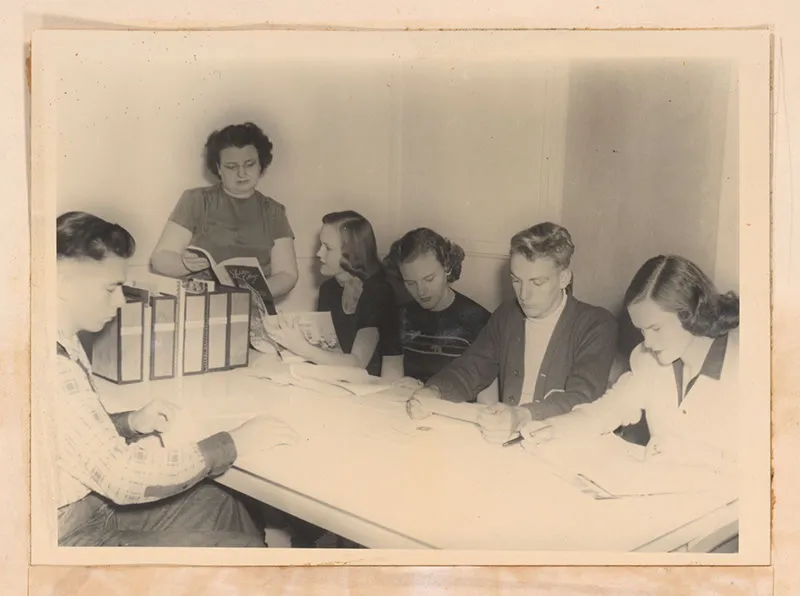
Photo: Published by Screven-Jenkins Regional Library System, Sylvania, Georgia, Public domain, via Wikimedia Commons
For families balancing an American high school transcript with IIT-JEE preparation, the admissions question is rarely whether the work is difficult. It is whether the work can be understood. US admissions offices review thousands of files each cycle, and they are trained to reward rigor they can contextualize. An international entrance exam that is unfamiliar to most counselors and admissions readers therefore needs translation, not amplification.
The goal is not to persuade a college that IIT-JEE preparation is impressive. The goal is to make it legible. That distinction should shape every line of the application, from the counselor letter to the activities list to the additional-information section.
What Admissions Officers Actually Reward
Holistic review at selective US colleges generally looks for evidence of academic preparation, consistency, intellectual engagement, and context. Readers want to see that a student has taken demanding courses, performed well, and pursued depth in areas that matter to the student. They also want corroboration. A claim that a student completed advanced mathematics is stronger when it appears in a transcript, a counselor letter, or a documented syllabus than when it appears only in a personal essay.
This is why the phrase “rigorous external coursework” is more useful than “world’s hardest exam.” The first invites verification. The second invites skepticism, especially when it is presented without evidence.
The Verification Gap
Most US admissions readers will not know the structure of the IIT-JEE, the difference between the Main and Advanced examinations, or the typical preparation timeline. That is not a criticism of admissions offices. It is a practical constraint. Families should assume that no reader will infer rigor from the exam’s name alone.
A useful test is simple: could a counselor who has never heard of the IIT-JEE describe the work accurately after reading the student’s file? If the answer is no, the file needs a clearer record.
Building the Two-Column Record
Think of the application as having two columns. The first column is the school transcript: courses, grades, GPA, and school profile. The second column is the external academic record: what the student studied outside the school day, who supervised it, how it was assessed, and how it connects to the school curriculum.
The second column should be concise. A one-page supplement is usually enough. It can include:
- The title of the external course or preparation sequence.
- The instructor or program, with a contact who can verify participation.
- Weekly hours and total weeks of instruction.
- Major topic areas, listed in plain English.
- The assessment method, such as timed tests, graded problem sets, or periodic examinations.
- The grading scale, if one exists.
This is not a substitute for a high school transcript, and it should not be presented as one. It is a context document. Its purpose is to help a reader understand the scope of work without requiring them to become an expert in Indian entrance examinations.
Describing Problem-Solving Depth Without Overclaiming
Precision matters more than intensity. Instead of writing that a student “mastered college-level physics,” describe the topics covered: mechanics, electrostatics, current electricity, optics, and modern physics, with an emphasis on multi-step quantitative problems. Instead of claiming “graduate-level mathematics,” list the areas: algebra, trigonometry, coordinate geometry, calculus, and probability.
Admissions readers are alert to inflation. A student who writes “I completed coursework equivalent to a college minor” invites a comparison that cannot be supported. A student who writes “I completed a two-year preparation sequence in physics and mathematics that included weekly timed assessments and cumulative problem sets” gives the reader something concrete.
At Bansal IIT-JEE Academy, we advise families to use verbs they can defend: studied, completed, solved, analyzed, reviewed, and assessed. Avoid verbs that imply institutional credit unless credit was actually awarded. IIT-JEE preparation can demonstrate sustained intellectual effort without being dressed up as a college transcript.
Phrasing That Weakens the File
Several common phrases make international exam preparation sound less credible, not more.
“Certified in IIT-JEE preparation” is misleading unless a recognized body issued a certification. “Independent research” is inappropriate for problem sets and exam review. “Double coursework” should be reserved for cases where the school transcript actually shows two parallel courses. “World’s hardest exam” is a slogan, not a description.
Families should also avoid vague claims such as “trained in advanced math” without a topic list or supervisor. Admissions officers are not looking for martial-arts style credentials. They are looking for evidence of academic work.
Working With the School Counselor
The counselor letter is one of the most effective places to contextualize external preparation, but it works best when the counselor has clear, factual material. Provide a one-page fact sheet, not a binder. Ask whether the counselor is willing to mention the external coursework in the letter, and accept a no if the counselor is uncomfortable. Do not ask a counselor to characterize the IIT-JEE as equivalent to anything the school does not offer.
It also helps to connect the preparation to the school profile. If the student has exhausted the school’s mathematics sequence, the counselor can say so. That is a context claim the school can verify.
The Standard Is Clarity, Not Hype
For the 2026–27 admissions cycle, the strongest files will not be the ones that shout the loudest about an unfamiliar exam. They will be the ones that make the work understandable. A clear supplement, a precise activities description, and a counselor who can speak to the student’s academic context will do more than a page of superlatives.
IIT-JEE preparation can be a meaningful part of an American student’s academic story. It becomes useful to admissions readers when it is presented as documented coursework and sustained problem-solving, not as an unverifiable extracurricular. The two-column transcript is not a marketing device. It is a translation tool, and translation is what the file needs most.