The Recruiter's Verdict: How Google, Microsoft, and Nvidia Actually Weigh an IIT Degree Against a Stanford One
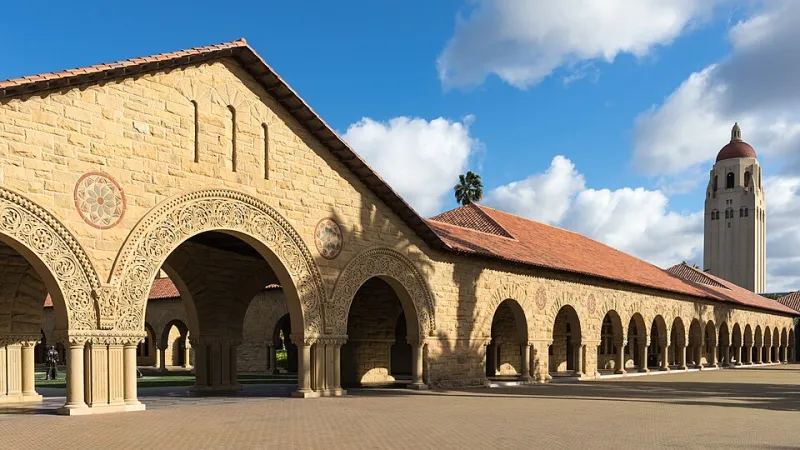
Photo: Frank Schulenburg, CC BY-SA 4.0, via Wikimedia Commons
Every spring, thousands of American tech recruiters review résumés from two very different pools of engineering talent: graduates of Stanford, MIT, and UC Berkeley, and graduates of the Indian Institutes of Technology. The former need no introduction. The latter, increasingly, do not either.
For families weighing the IIT path — including the growing number of Indian American students considering the journey — the central question is practical, not sentimental: does an IIT degree carry real weight in a Silicon Valley hiring pipeline?
The Short Answer From the Hiring Floor
Ask recruiters at major US technology companies and a consistent picture emerges. The IIT brand is recognized, respected, and — critically — understood to represent something specific: survival of one of the most competitive selection processes in the world. With acceptance rates below one percent at the top IITs, the credential functions as a pre-verified signal of mathematical rigor and work capacity.
That signal matters most at the entry level. When a hiring manager at a large tech firm sees "IIT Bombay, Computer Science" on a résumé, it often triggers the same kind of attention that a Caltech or Carnegie Mellon degree does. Several large companies have maintained dedicated India-facing recruiting channels for years, and alumni of the IITs hold prominent engineering and research positions across the American technology sector — a visibility that reinforces the brand with each hiring cycle.
Where the IIT Advantage Is Strongest
The credential performs best in three contexts.
First, highly technical roles. Positions in algorithms, systems engineering, semiconductor design, and machine learning research reward exactly the kind of deep, problem-solving-heavy preparation that the IIT-JEE process demands. The exam's emphasis on multi-step physics, calculus, and analytical reasoning mirrors the day-to-day work of these roles more closely than many standardized American assessments.
Second, companies with global engineering footprints. Firms with major operations in Bengaluru, Hyderabad, and Pune have institutional knowledge of the IIT system. Their hiring committees — including those in the US — tend to evaluate IIT candidates with confidence and precision.
Third, graduate admissions as a bridge. A significant share of IIT graduates enter the American market through top US master's and PhD programs. Admissions committees at Stanford, MIT, and Berkeley are intimately familiar with IIT transcripts, and the degree frequently strengthens applications for funded graduate study — which then leads to US employment through the conventional STEM pipeline.
Where the Halo Fades
Honesty requires acknowledging the limits. In the American market, no credential substitutes for demonstrated work. A Stanford undergraduate with two internships at Bay Area startups, a portfolio on GitHub, and an active network in the Valley often outcompetes a stronger academic profile with thinner practical experience. American hiring culture weights internships, referrals, and communication skills heavily — areas where a student who has spent four years in the US naturally accumulates advantages.
There is also the question of network effects. The value of a Stanford degree in Palo Alto is partly the value of its proximity: guest lectures, hackathons, faculty connections, and a social circle embedded in the industry. An IIT graduate arriving in the US builds that network from scratch, typically with the help of the strong, well-organized IIT alumni associations in the Bay Area, New York, and Seattle — which are, in fairness, among the most active alumni networks of any institution in America.
What the Trajectory Data Suggests
Career outcomes for IIT alumni in the US are, on the whole, exceptional: leadership roles at major technology firms, founding teams of significant startups, and tenured positions at leading American universities. Of course, selection bias plays a role — the students who clear the IIT-JEE are extraordinary before they ever enroll. The degree did not create that ability; it identified and sharpened it.
That framing matters for families making decisions. An IIT education is not a shortcut around the realities of the American job market. It is a rigorous foundation that travels well, particularly when paired with internships, strong communication skills, and graduate study.
The Bottom Line for Ambitious Students
For students already in the United States, the calculus is personal: the IIT path demands relocation, a punishing preparation cycle, and comfort with uncertainty. What it offers in return is unmatched academic training, a global alumni network, and a credential that America's top engineering employers demonstrably recognize and reward.
At Bansal IIT-JEE Academy, we advise families to treat the IIT degree not as a replacement for the American college experience, but as an alternative entry point into the same industry — one earned through the hardest entrance examination in the world, and one that hiring managers from Mountain View to Redmond have learned to take very seriously.